About
When I started the Confluence project in 2019, the only thing I really know about Greeley water was that we could drink it from the tap and it tasted good. In my travels, bottle water was always suggested if not required to stay healthy and I always looked forward to coming home as to be able to drink from the tap again.
The photographs seen in this exhibition highlight only a small portion of the City of Greeley’s Water infrastructure. They are places that historically photographers found significant enough to document and they are essential to maintain Greeley’s unique access to water.
On each wall of the gallery, you will find groupings of photographs that relate to each other in subject matter or in space. The front part of the gallery features water infrastructure and water landmarks within the city limits. The back section features spaces outside of Greeley that were constructed to support the city’s water needs. With each image, you will find a photograph from the archive that accompanies the contemporary photograph. The photographs from the archive were chosen with the direction Harold Evans, a longtime Greeley Native and and Water Board Member.
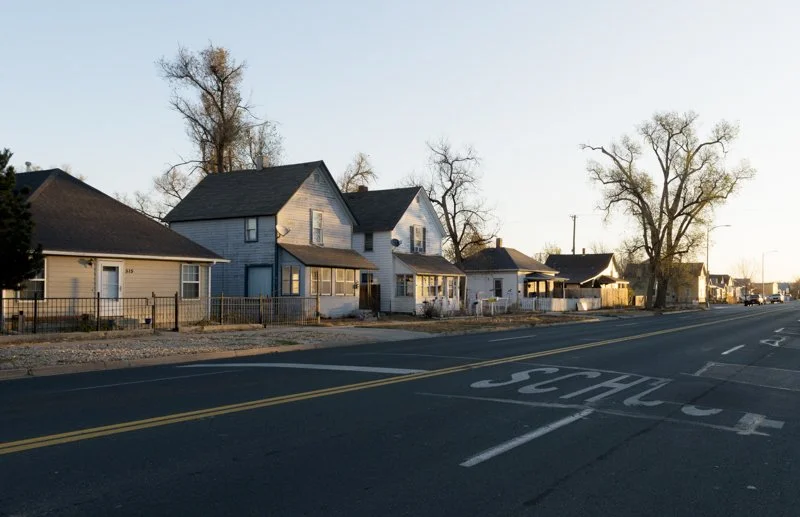
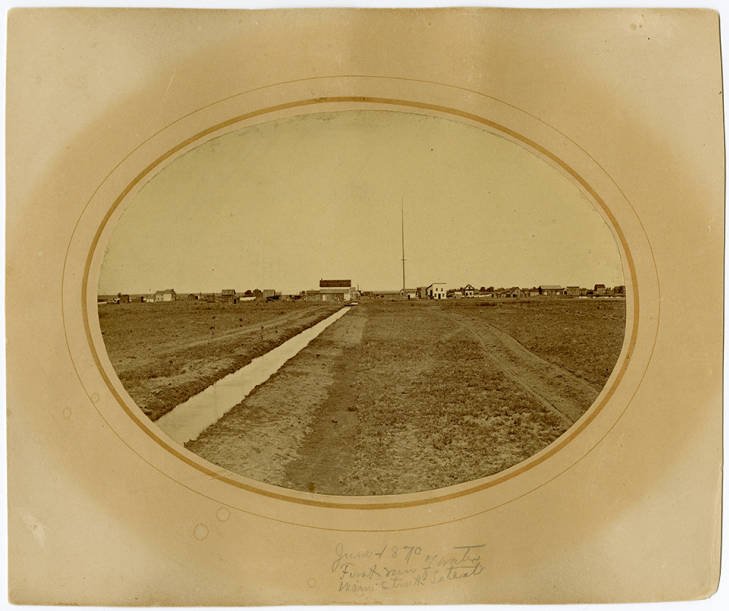
Main Street, Greeley, Colorado, 1870
City of Greeley Museums, Permanent Collection, AI-0007.
Lincoln Park, Greeley, CO Territory, July 4, 1870, Main Street
looking east from the intersection of 10th Avenue. Water
from the Greeley Number 3 Ditch, eight blocks south of the
park, was diverted into smaller ditches, called “laterals,”
throughout the town. This enables the Union Colonists to
flood irrigate their yards, gardens and Lincoln Park.
Gregory J. Hobbs, Jr. and Michael Welsh, Confluence: The
Story of Greeley Water (City of Greeley, 2020), 29
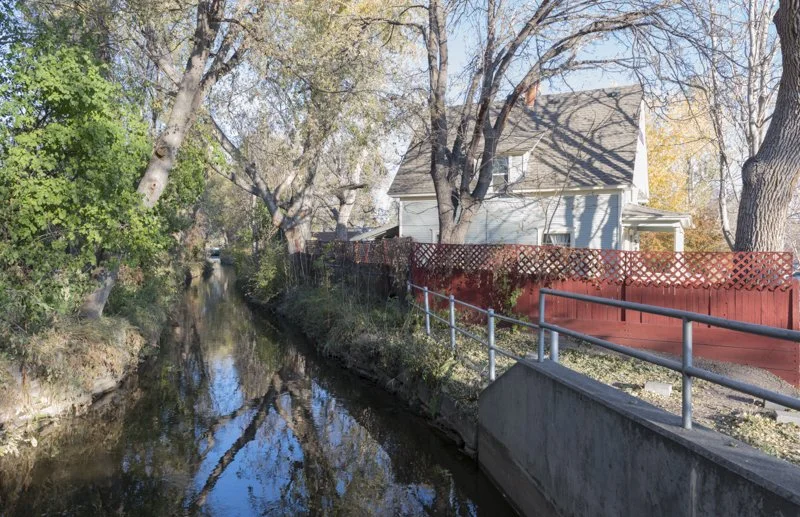
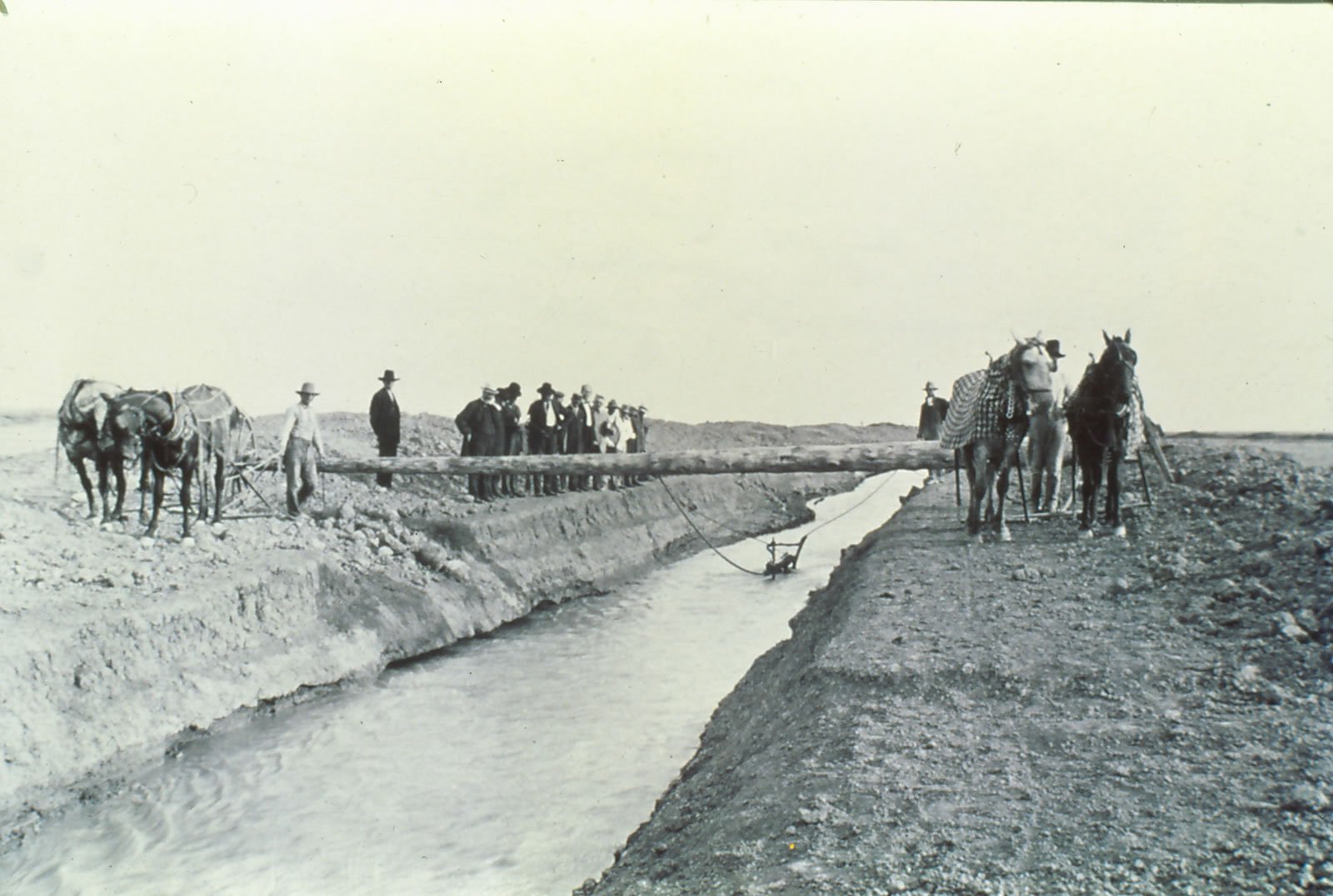
Early Water Ditch Construction City of Greeley Museums, Permanent Collection, 1970.22.0021.88
Irrigation was the solution to transform the “Great American Desert” into a bountiful “Oasis.” Patents for scrapers and dredging devices, pulled by horse or oxen teams, appeared in the 1870s. In 1883, a Californian, James Porteous, patented his “Fresno scraper” and thousands were manufactured and used to construct canals and ditches.
The name and loca///////tion of the irrigation ditch seen here is unknown.
Gregory J. Hobbs, Jr. and Michael Welsh, Confluence: The Story of Greeley Water (City of Greeley, 2020), 28.
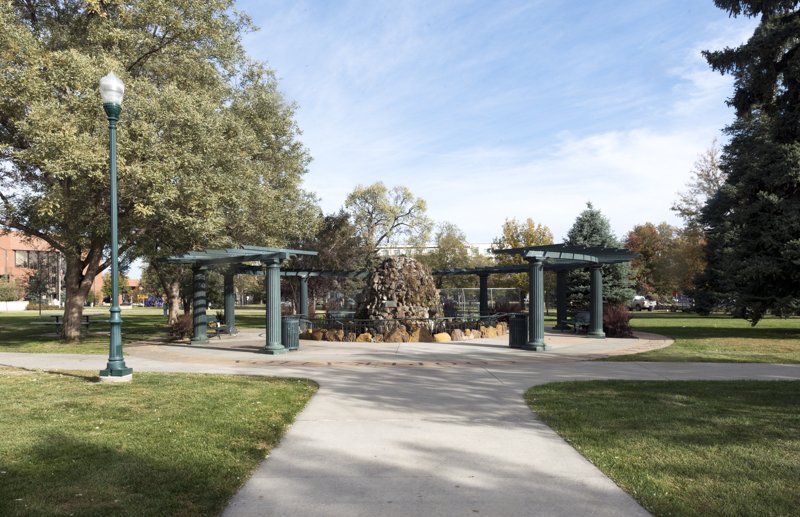
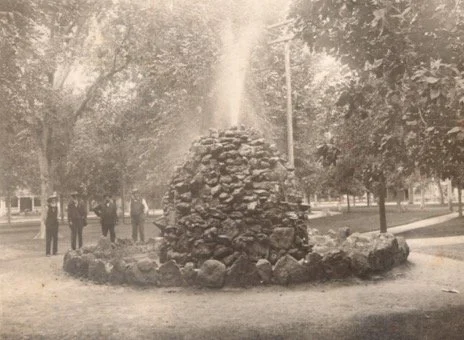
Pioneer Fountain City of Greeley Museums, Permanent Collection, 1970.22.0021.142
Four men stand next to Pioneer Fountain in Lincoln Park in Greeley. The fountain is entirely made of rocks and is encircled by rocks as well. The spray from the fountain primarily is emitted from the top.
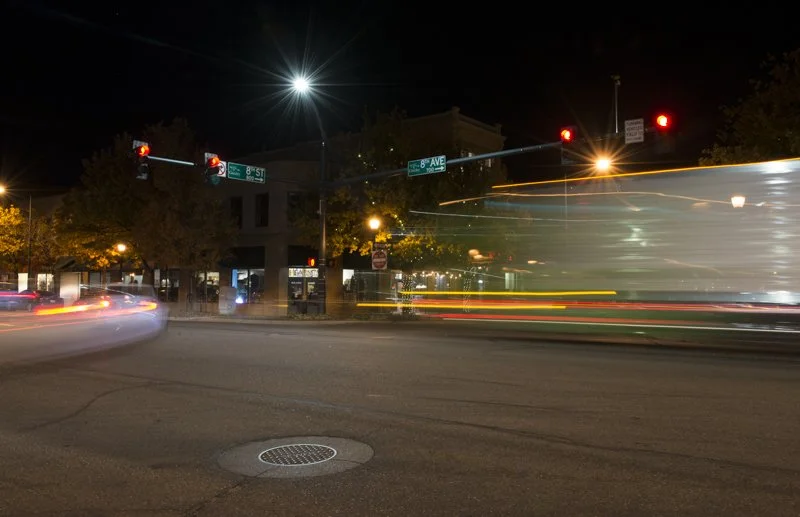
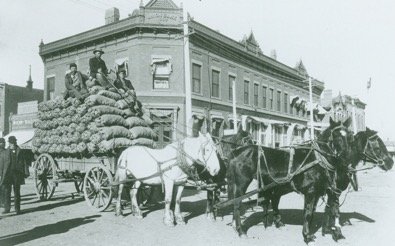
Potato Farmers, Corner of 8th Street & 8th Avenue, 1880-1890
Courtesy of City of Greeley Museums During the 1890’s and early 1900’s, Greeley & Weld County were the top potato production areas in the county.The wagon load of potatoes pictured here was made at the corner of 8th street and 8th avenue.
Gregory J. Hobbs, Jr. and Michael Welsh, Confluence: The Story of Greeley Water (City of Greeley, 2020), 65.
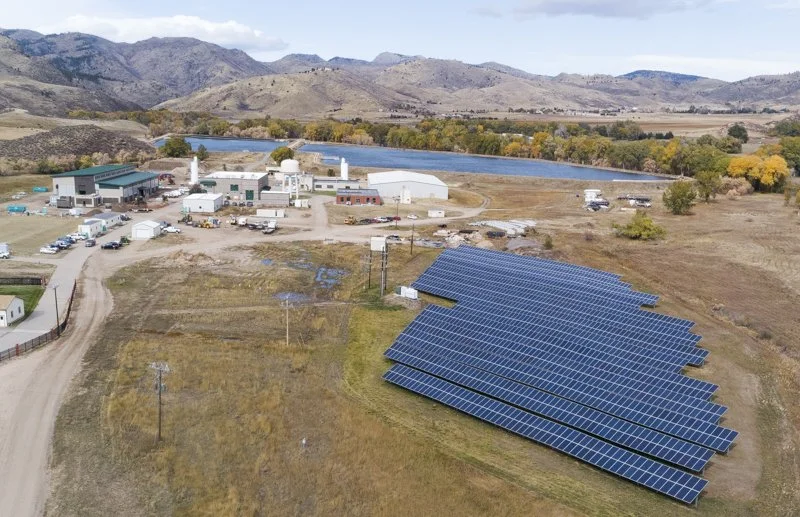
]\Greeley-Bellvue Water Treatment Plant, 2019
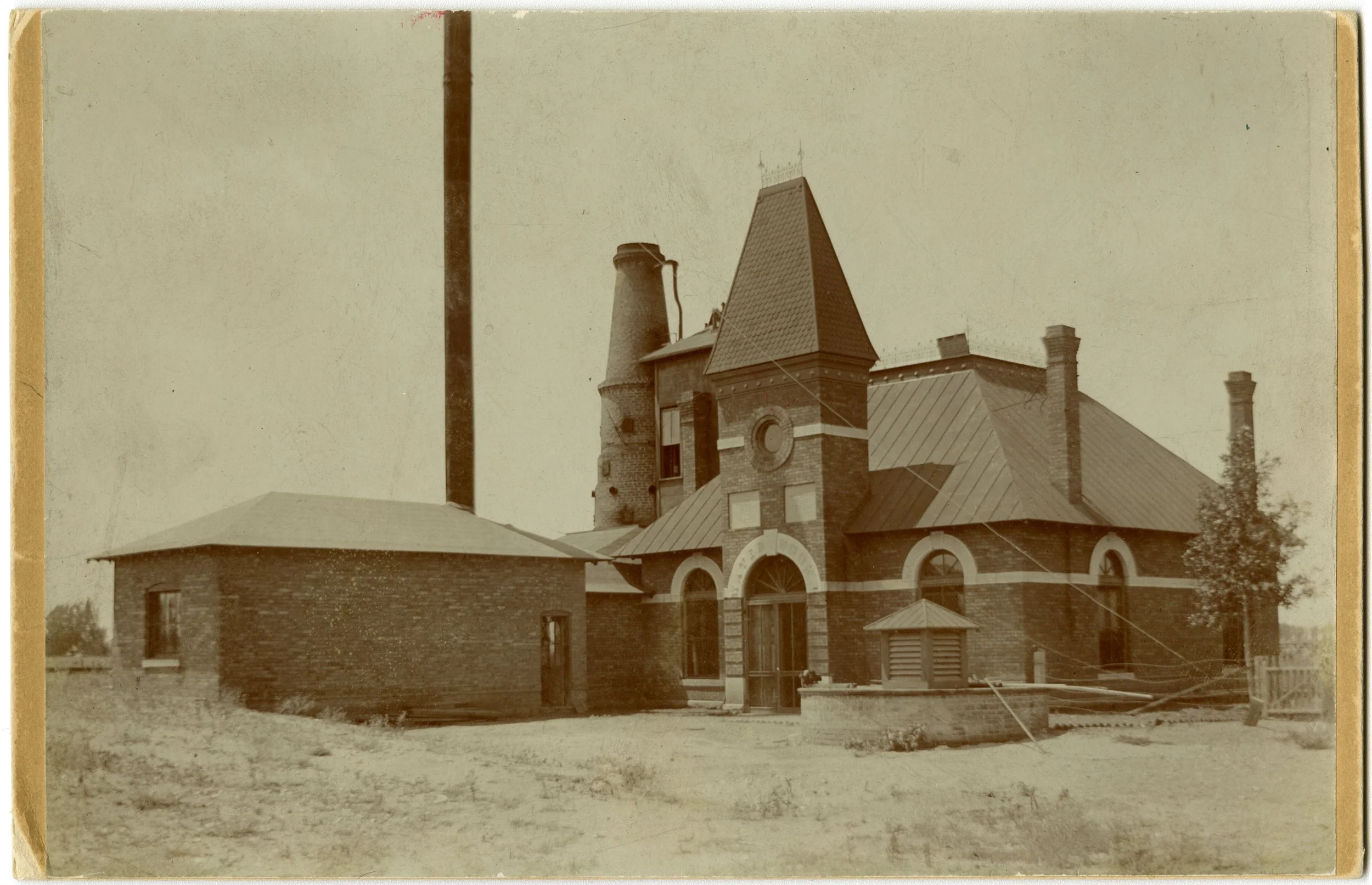
Greeley Waterworks Pumping Station, 1889
City of Greeley Museums, Permanent Collection, AI-0014.
In 1889, Greeley’s first water works plant was constructed at 14th Avenue and A Street. Two steam pumps forced water from infusion chambers (dug at the site) into water mains under the streets, and to a 138,000-gallon water tower on Inspiration Hill. Daytime pump capacity was 45,000 gallons per hour. At midnight, pumps were shut down and then restarted at 5:00 a.m. As demand regularly outpaced supply, Greeley faced a water shortage crisis by 1900.
Gregory J. Hobbs, Jr. and Michael Welsh, Confluence: The Story of Greeley Water (City of Greeley, 2020), 58.
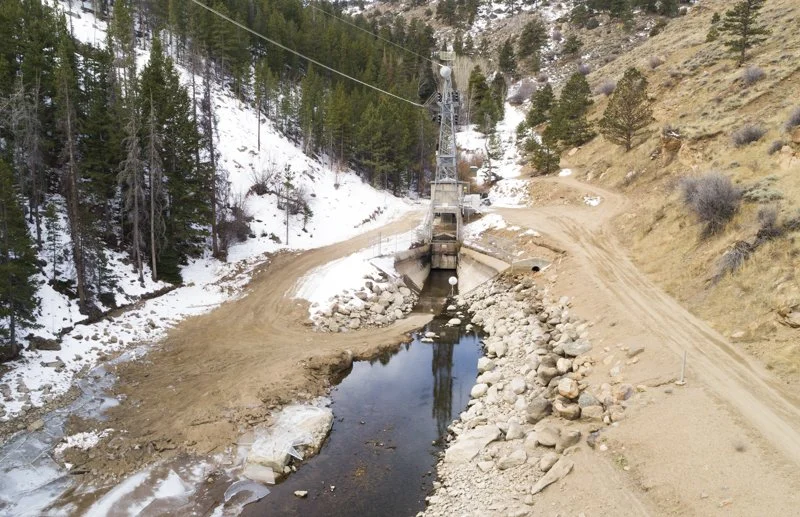
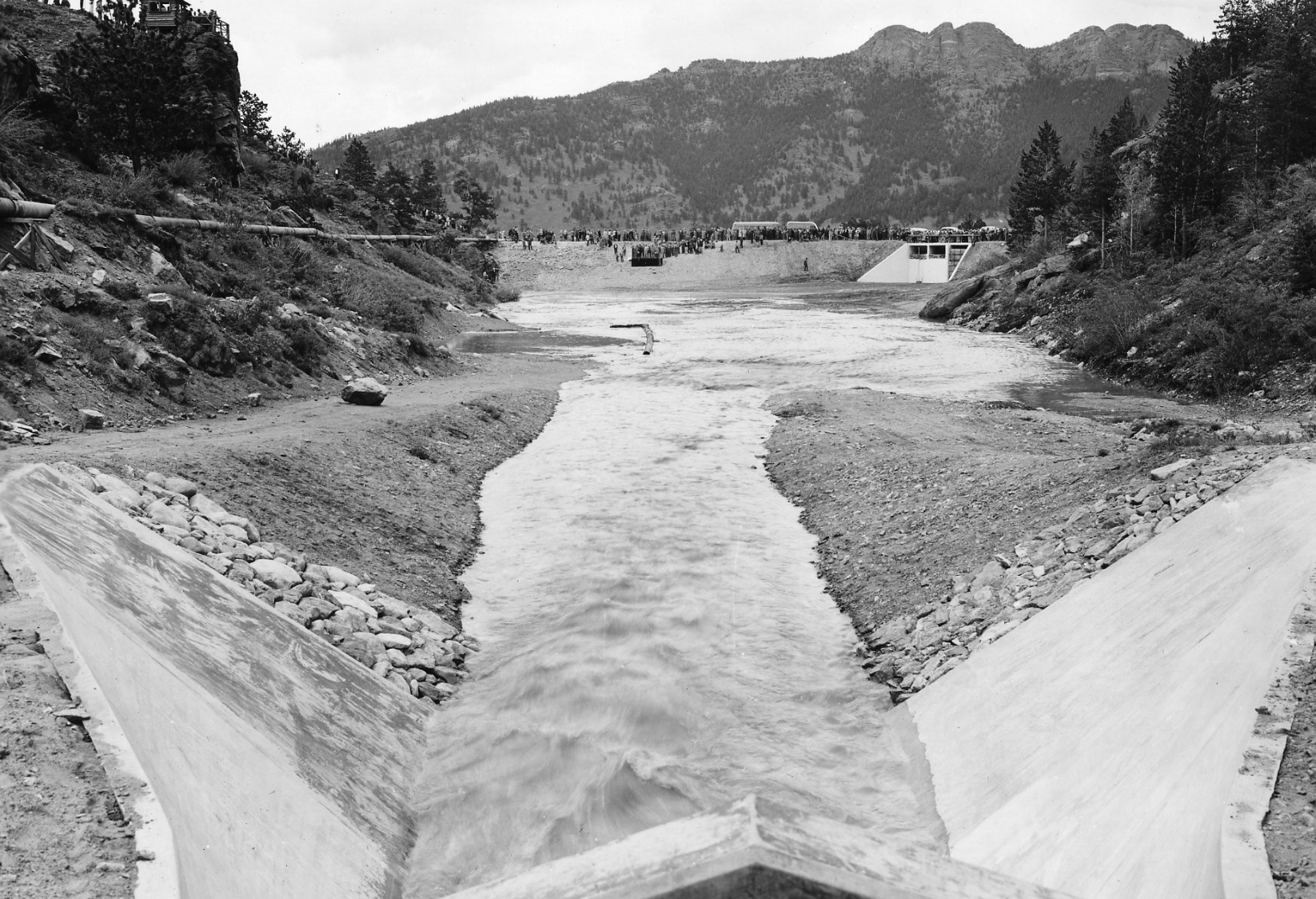
East Portal of Alva B. Adams Tunnel, 1947 Thompson, United States Bureau of Reclamation. Harry S. Truman Library & Museum. 2013-1170.
On June 23, 1947, an enthusiastic crowd gathered at the east portal of the 13.1 mil long Alva B. Adams Tunnel, part of the Colorado-Big Thompson project, and witnessed the arrival of the West Slope water. The tunnel is 9’9” in diameter and cost 12.8 million ($189 million 2020 dollars). At the time, it was the longest tunnel in the United States that delivered irrigation water.
Gregory J. Hobbs, Jr. and Michael Welsh, Confluence: The Story of Greeley Water (City of Greeley, 2020), 176.
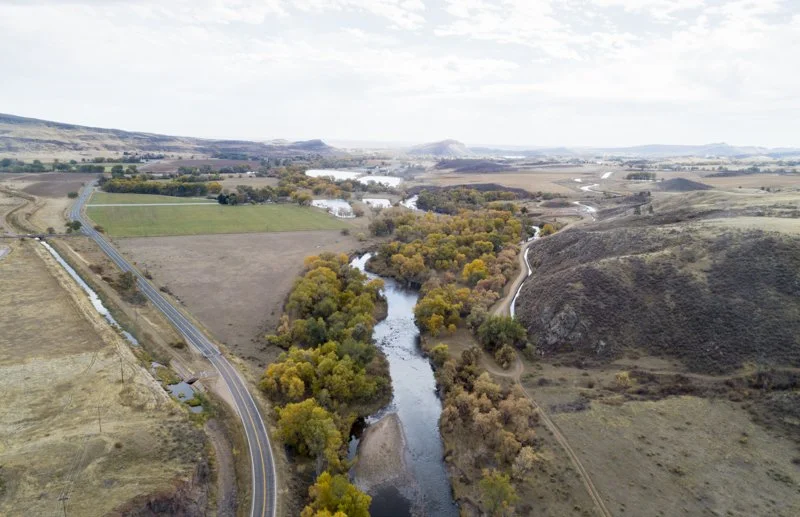
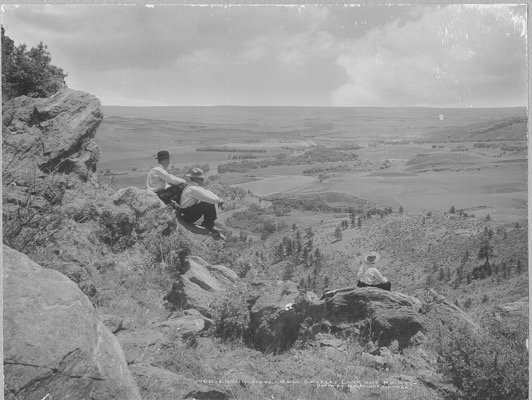
Bellvue Overlook, 1908
City of Greeley Museums, Permanent Collection, AI-2490
Looking into the future, in 1908, from an overlook above Greeley’s Bellvue Waterworks and the Cache la Poudre River.
Gregory J. Hobbs, Jr. and Michael Welsh, Confluence: The Story of Greeley Water (City of Greeley, 2020), 281.
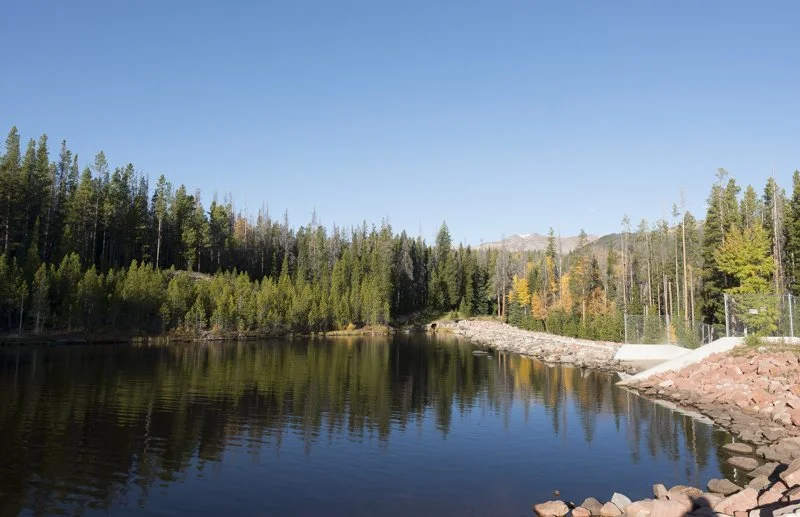
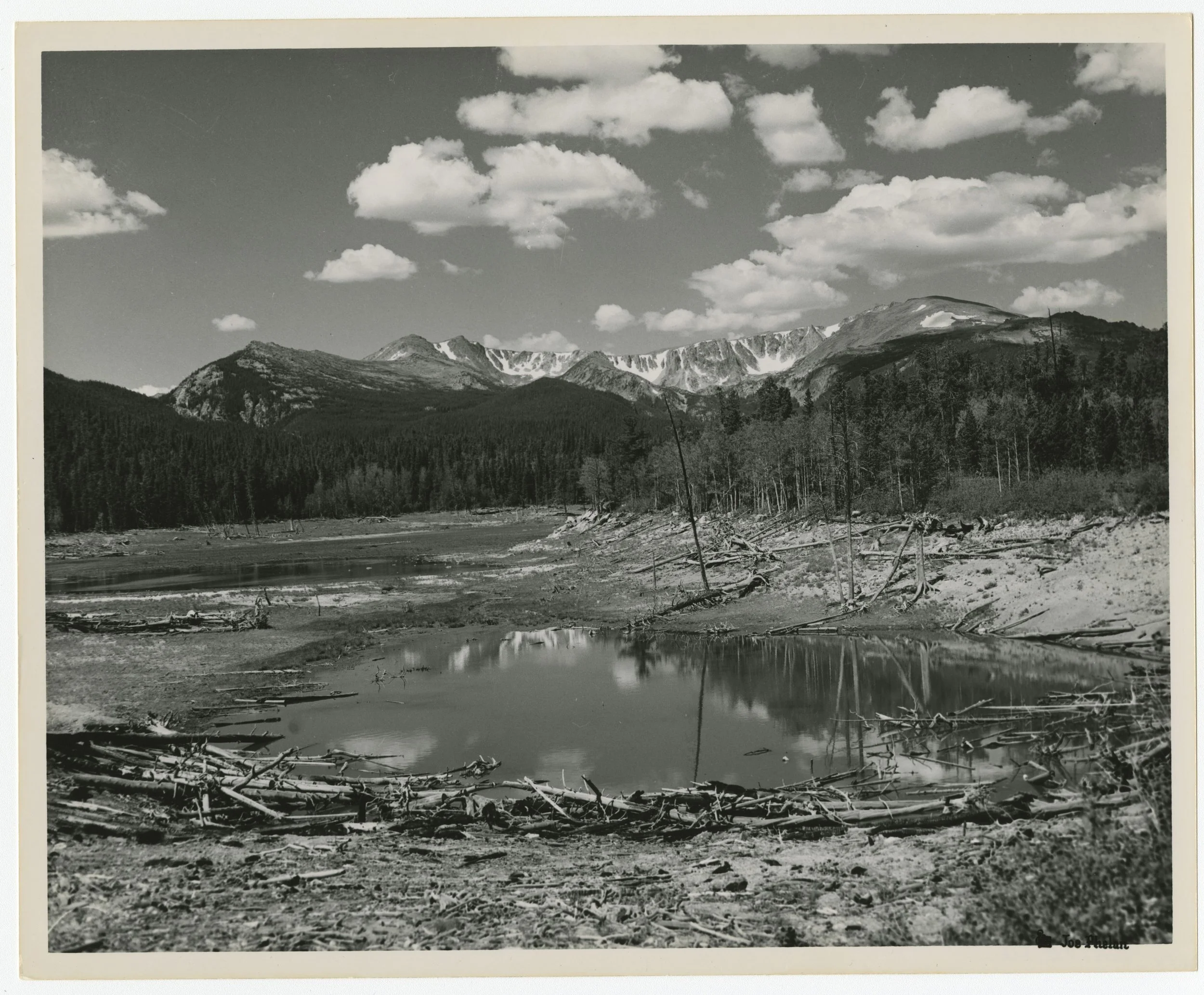
High Mountain Reservoirs City of Greeley Water Department
In 1947, Greeley purchased five mountain reservoirs from the Mountain and Plans Irrigation Company. They are located in the upper Cache la Poudre River Basin we of Fort Collins (in Larimer County) as seen on this map. These reservoirs are an integral part of Greeley’s storage portfolio.
Gregory J. Hobbs, Jr. and Michael Welsh, Confluence: The Story of Greeley Water (City of Greeley, 2020), 168.
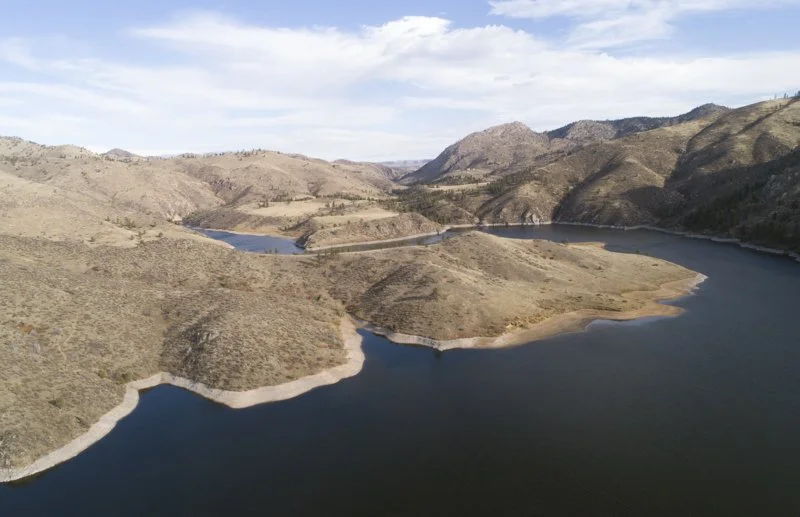
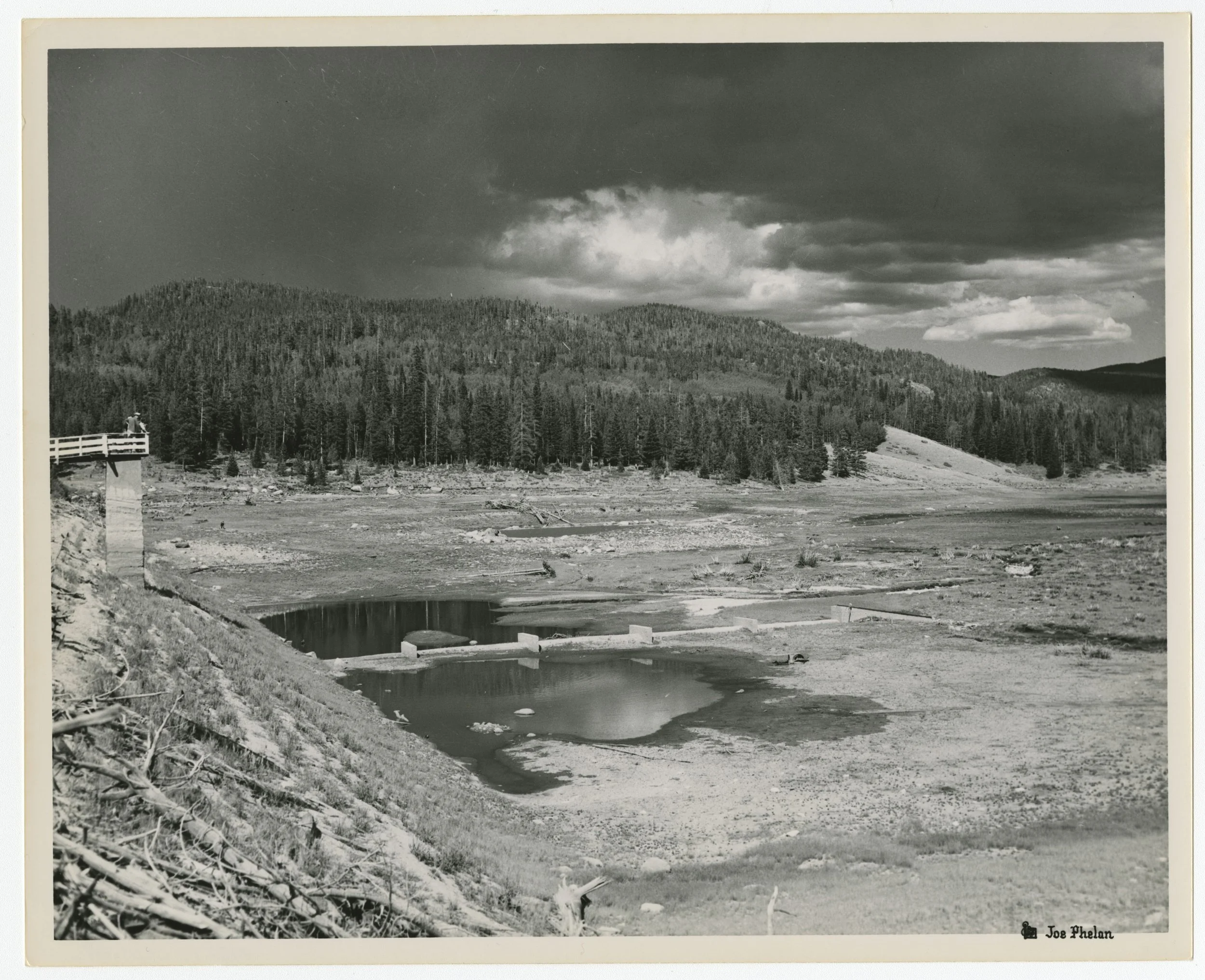
High Mountain Reservoirs City of Greeley Water Department
Work Projects Administration (WPA) and City funds were used to construct Milton Seaman Dam and Reservoir in 1940-1945. Labor and material shortages during WW2 periodically hampered construction. A succession of employees included WPA and Civilian Conservation Corp (CCC) workers, and Mennonite conscientious objectors, who were housed in a 125-man camp near the North Fork of the Cache la Poudre River.
Gregory J. Hobbs, Jr. and Michael Welsh, Confluence: The Story of Greeley Water (City of Greeley, 2020), 159.
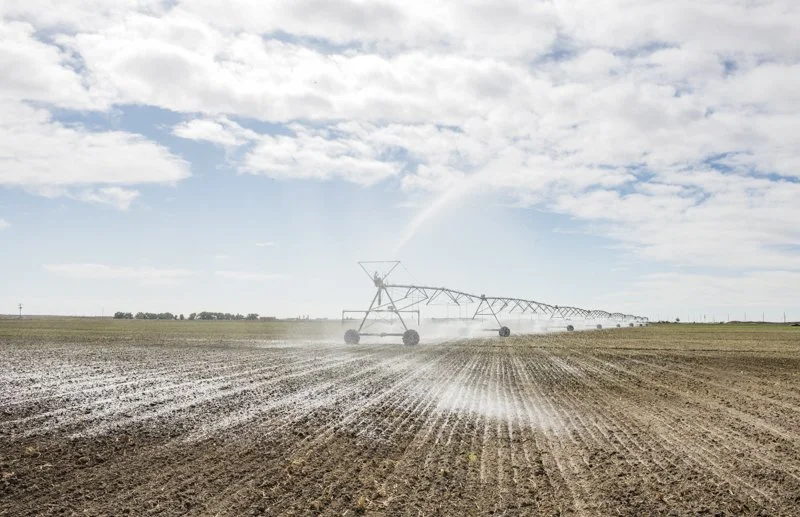
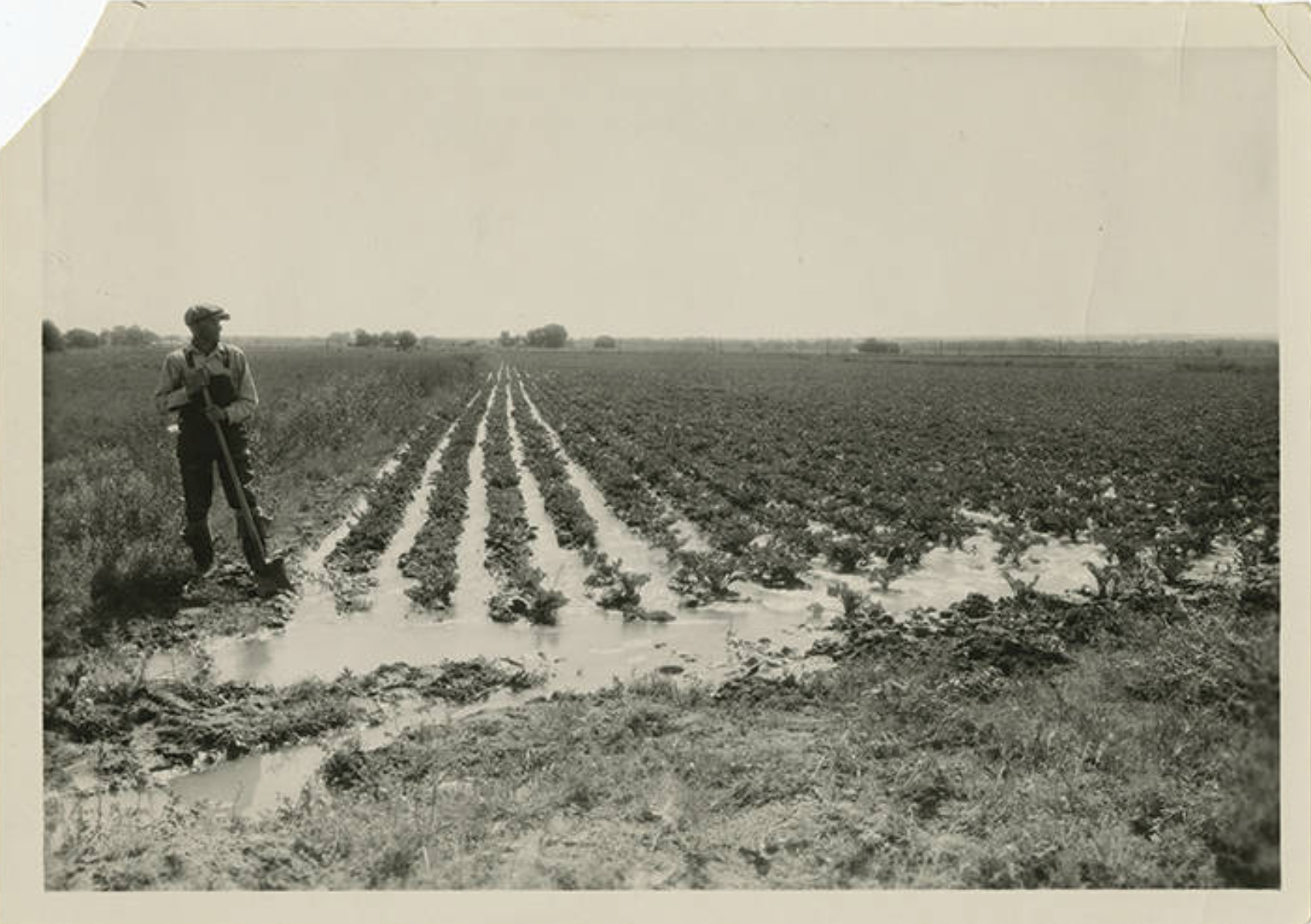
Irrigation of a beet field, Weld County
City of Greeley Museums, Permanent Collection, 1983.48.0013.31
A man stands on a mound of dirt near irrigation canals in a sugar beet field on a farm in Weld County, Colorado. The man is wearing a hat and holding a shovel.
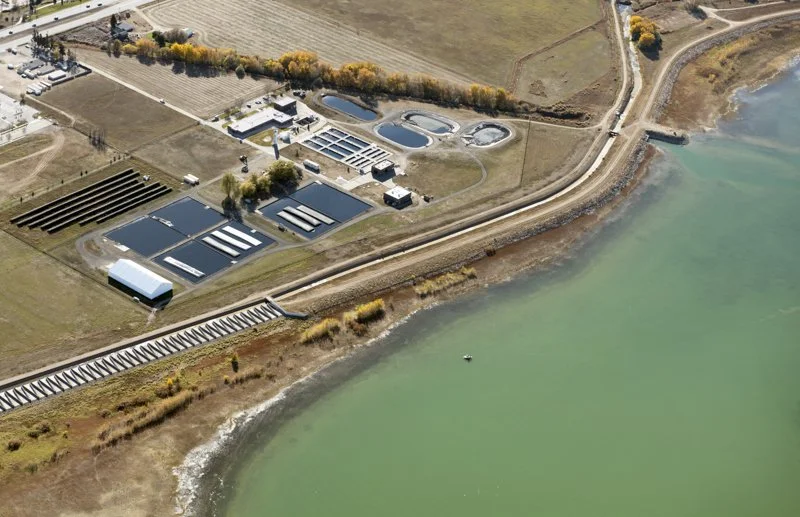
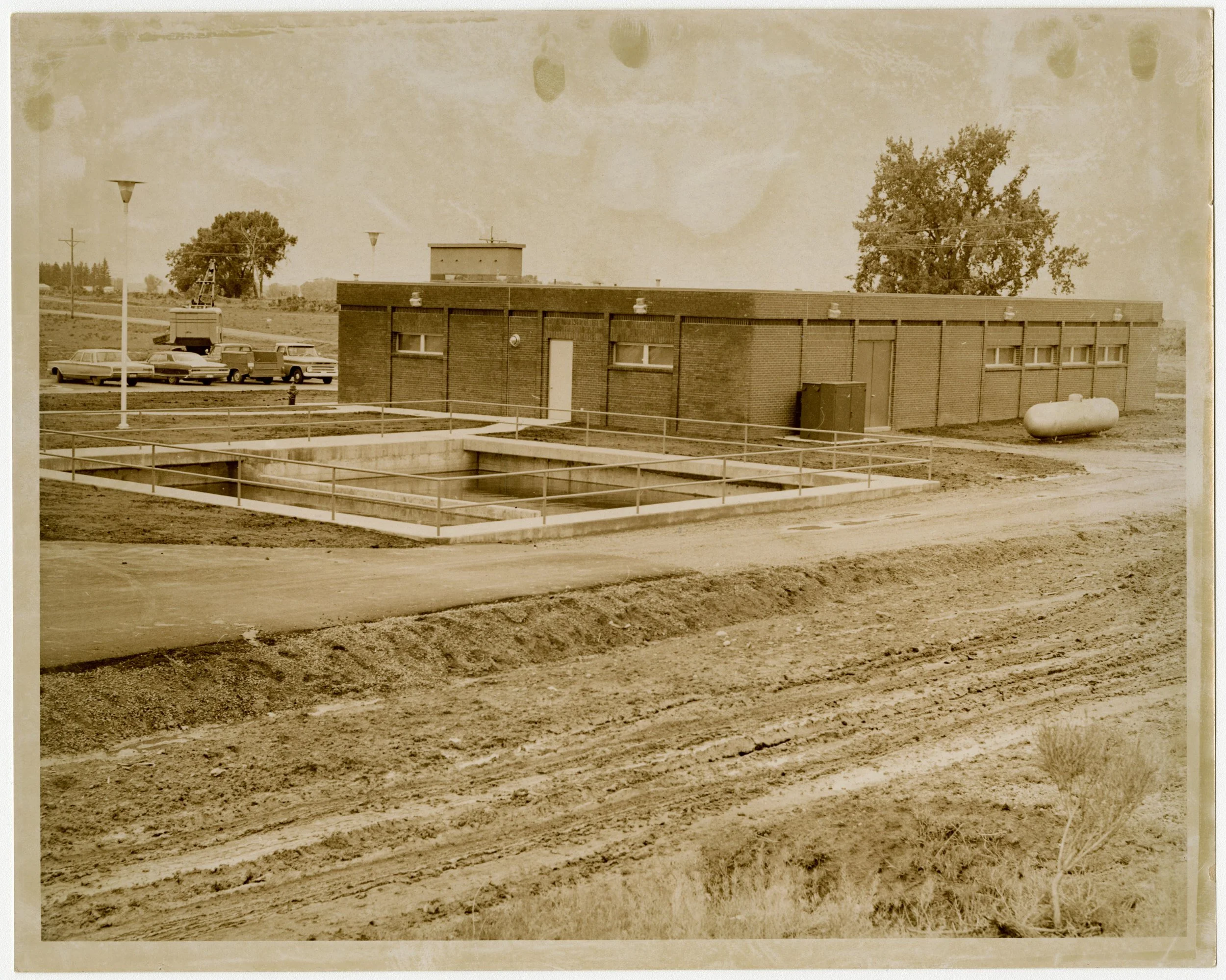
Boyd Lake Water Treatment Plant, 1969
City of Greeley Museums, Permanent Collection, AI-1005
The original Boyd Lake Water Treatment Plant (Plant No. 2), and its transmission lin, were completed in 1968. A substantially larger plant was constructed in 1976 and called Plant No. 1 (due to its larger size and capacity).
Currently, the Treatment Plant has the capacity to process 38 million gallons of water per day. This plant is Greeley’s summer peaking plant and is not run in the wintertime.
Gregory J. Hobbs, Jr. and Michael Welsh, Confluence: The Story of Greeley Water (City of Greeley, 2020), 186 & 262.
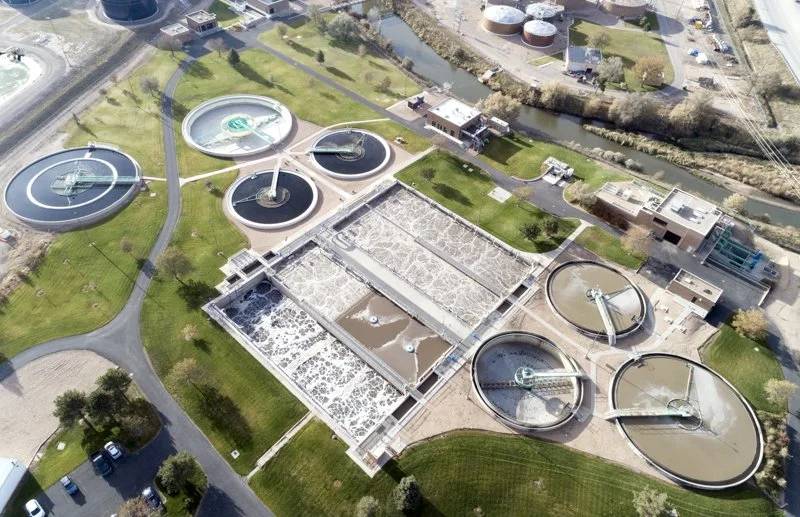
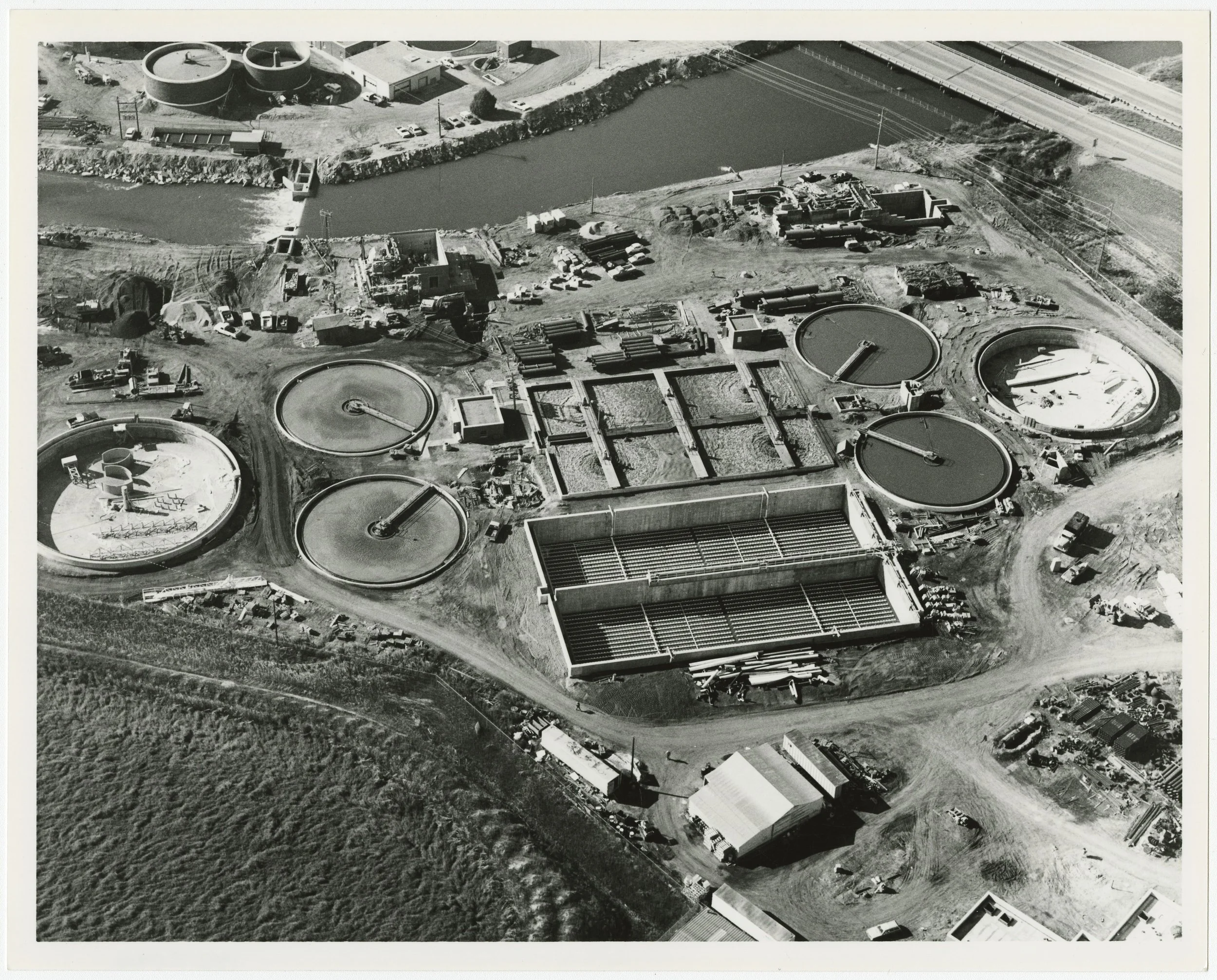
Water Pollution Control Facility,1985
City of Greeley Museums, Permanent Collection, 1992.75.0466
The 1984-1985 expansion of the Water Pollution Control Facility was the most costly capital improvement project ever undertaken by the City of Greeley. Included in the project were: a headworks building, primary clarifier tank, dichlorination facility. The completion of this project provided Greeley with a modern state-of-the-art wastewater treatment facility.
In 2020, the Greeley Water Pollution Control Facility was renamed the Greeley Wastewater Treatment and Reclamation Facility, reflecting its many technological upgrades since 2000. Theses include 24-hour computer tracking of sewage treatment, waste and bacteria removal, and discharge of effluent. New standards for the safe treatment and reclamation of wastewater.
Gregory J. Hobbs, Jr. and Michael Welsh, Confluence: The Story of Greeley Water (City of Greeley, 2020), 225 & 266.
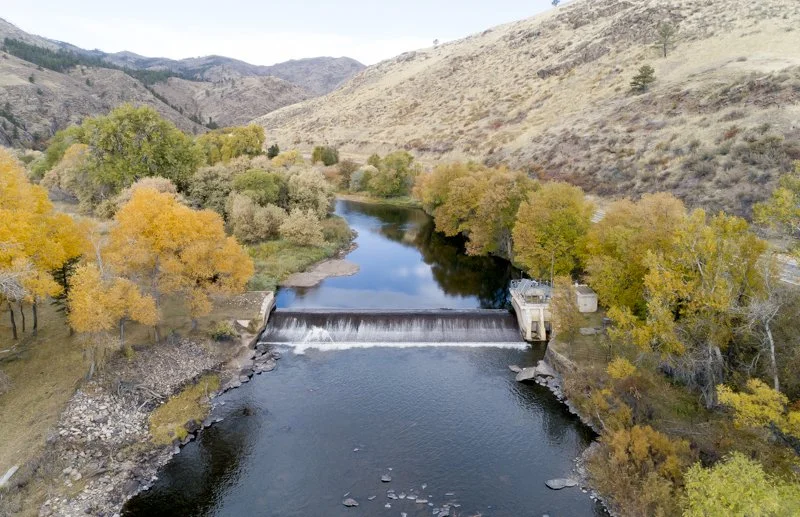
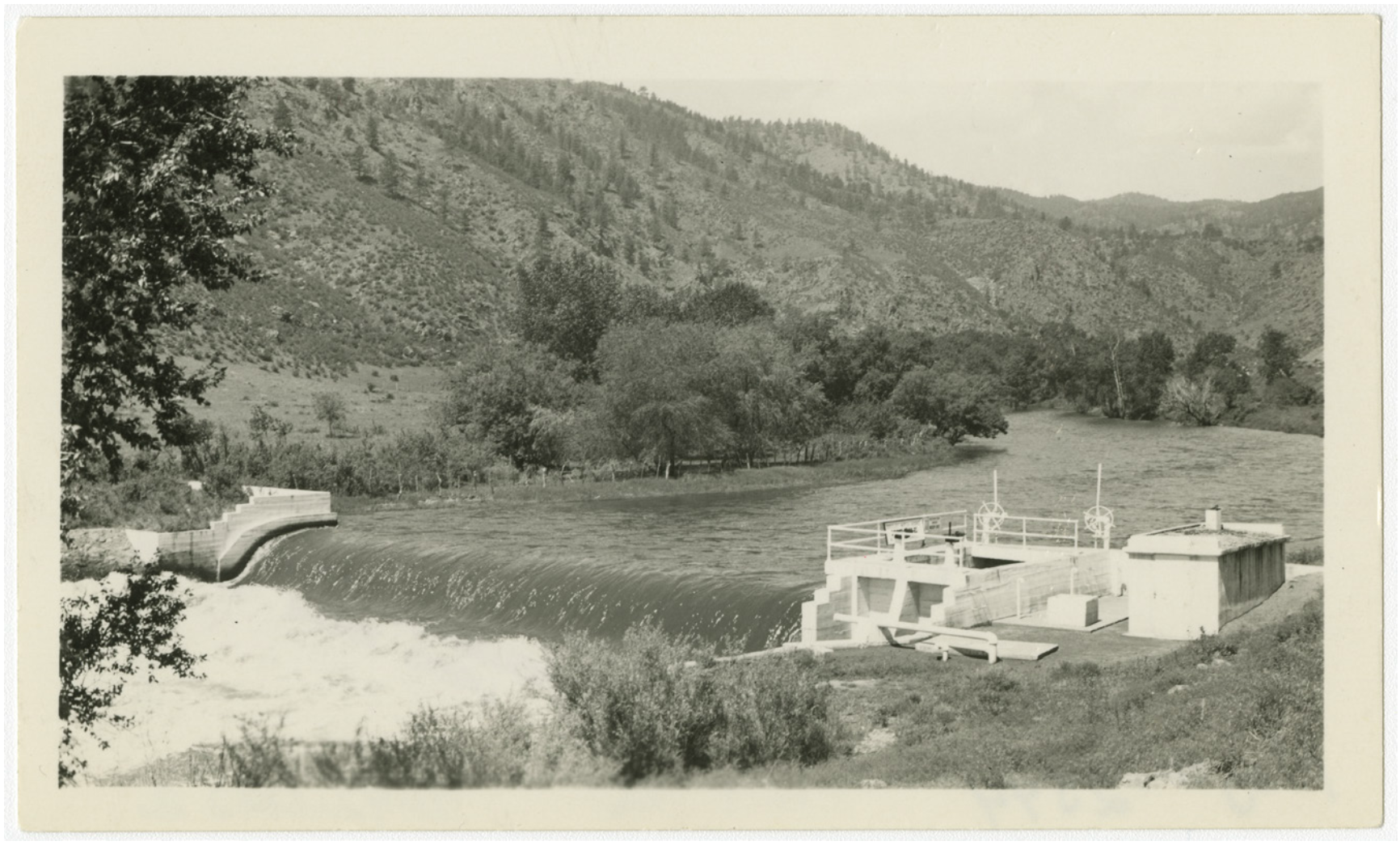
Poudre River Diversion Structure
City of Greeley Museums, Permanent Collection, 1991.42.1205A.
The Bellvue Water Treatment Plant can process 32 million gallons of water per day. Located on the Cache la Poudre River, it is Greeley’s year-round water treatment plant. The river diversion structure, seen here, diverts water from the river to the plant.
Gregory J. Hobbs, Jr. and Michael Welsh, Confluence: The Story of Greeley Water (City of Greeley, 2020), 263.
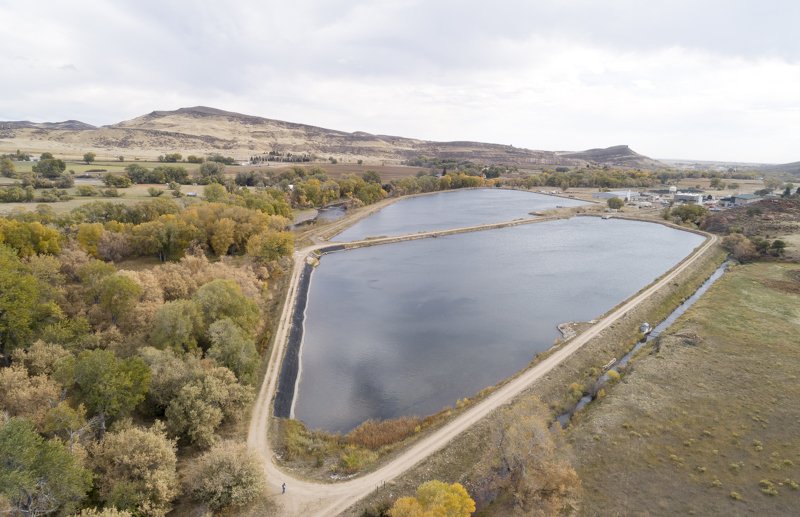
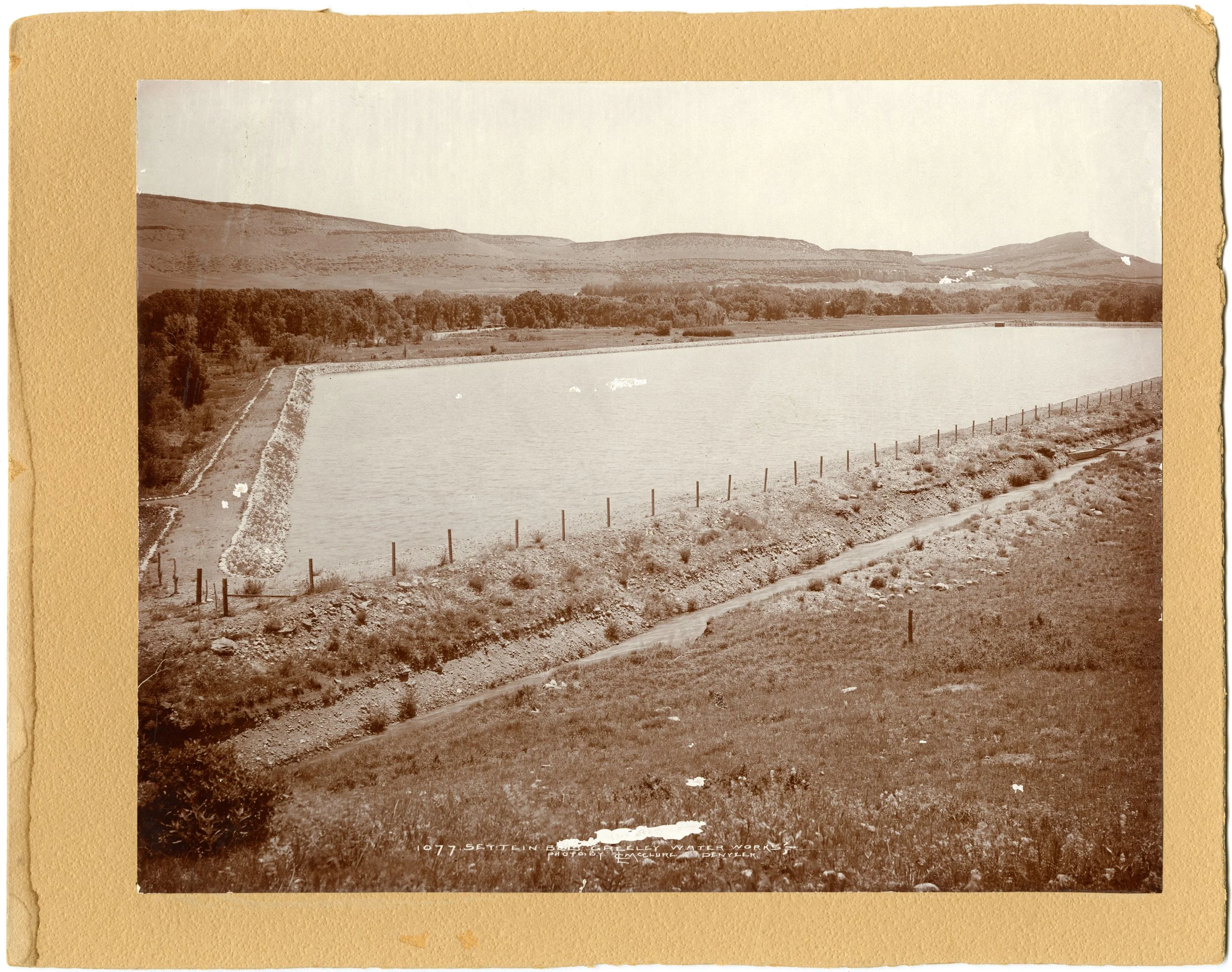
Filtration Beds at Bellvue,1907
City of Greeley Museums, Permanent Collection, AI-0959.
Greeley’s 1907 Bellvue Water Treatment Plant, located in
Larimer County’s Pleasant Valley, processed “mountain
water” from the Cache la Poudre River in slow sand filtration beds, seen here. A distinctive anticline, the Bellvue Dome (a.k.a., “Bellvue Fold” and “Goat Hill”) appears in the background. The river flows directly below the vertical cliff on the west side of the dome.
Gregory J. Hobbs, Jr. and Michael Welsh, Confluence: The Story of Greeley Water (City of Greeley, 2020), 84.
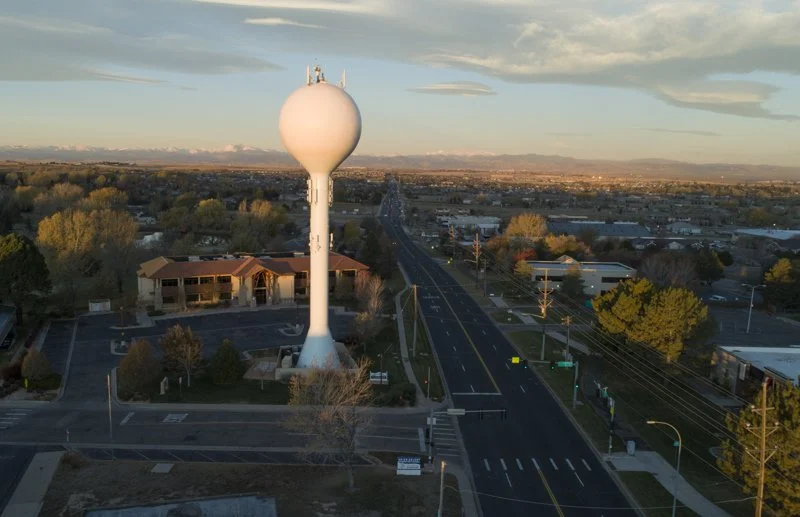
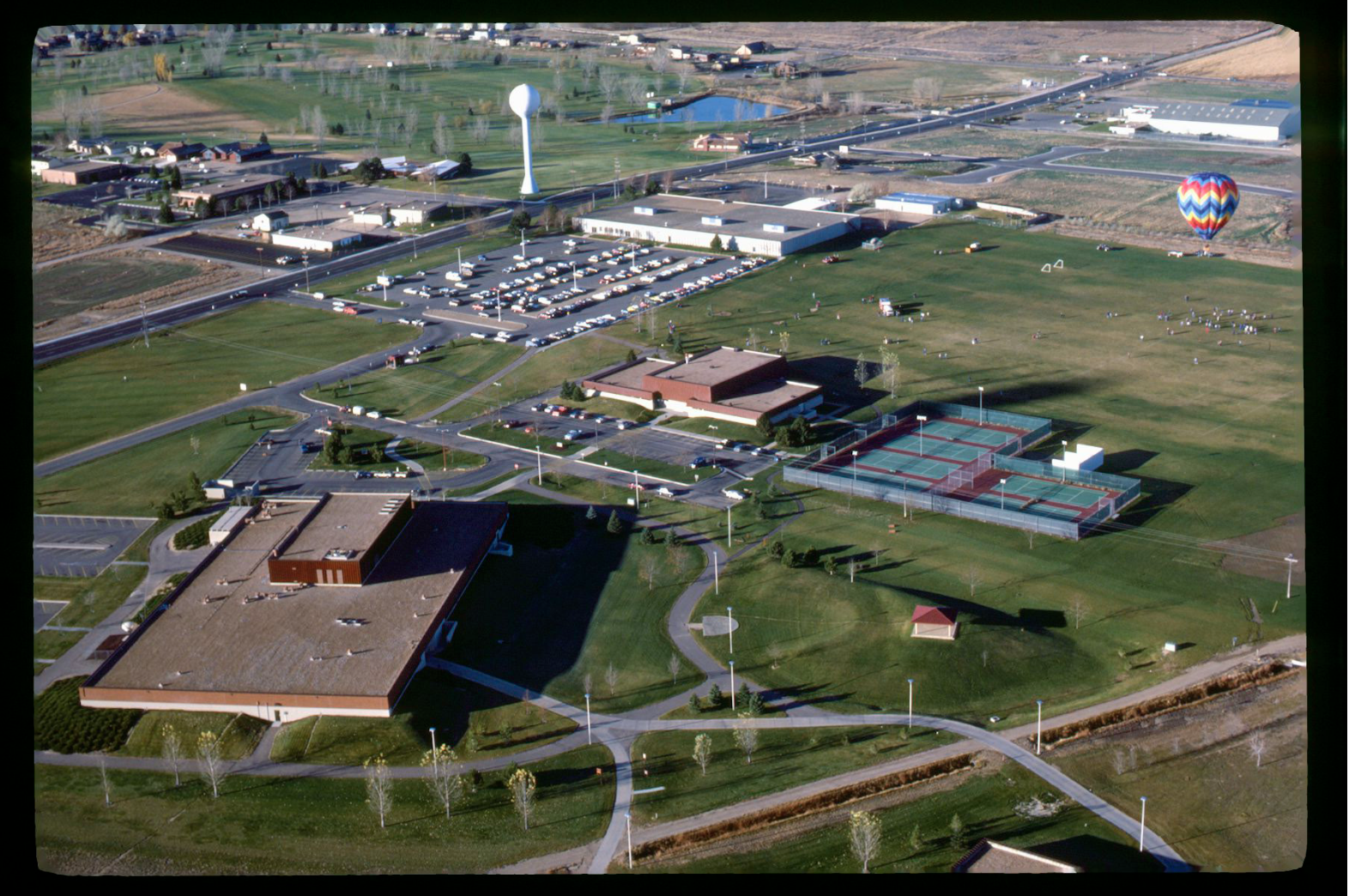
20th Street Water Tower, 1985
Courtesy of Aims Community College
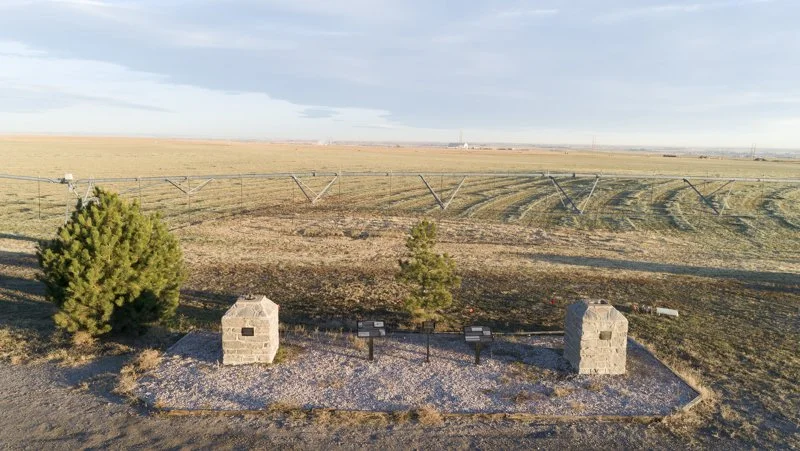
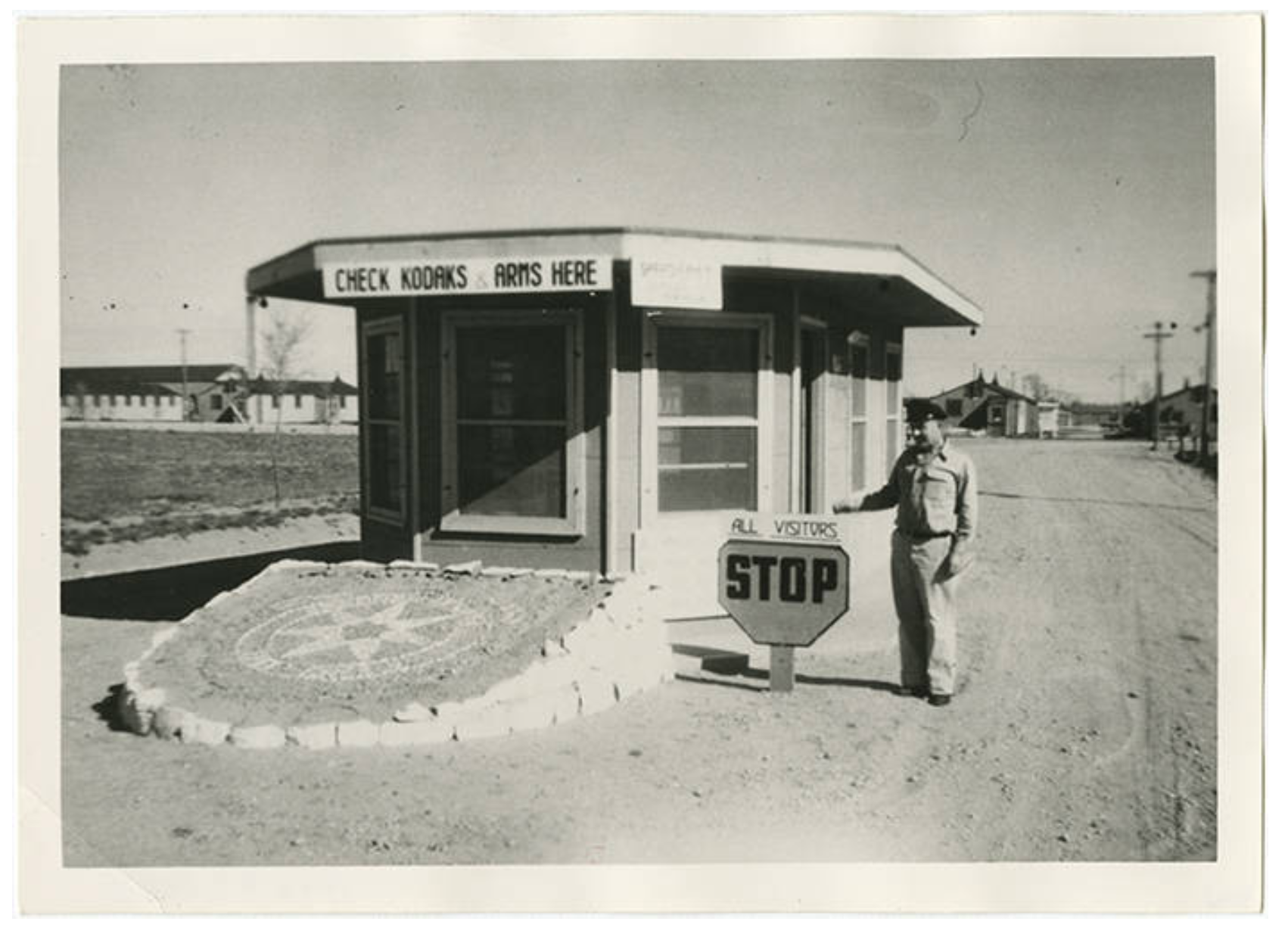
Guardhouse at Prisoner of War Camp 202, 1943
City of Greeley Museums, Permanent Collection, 1976.83.0003
Greeley Camp 202, under the command of the 9th Division of the U.S. Army, was a World War II prisoner of war internment camp. Built in 1943 on 320 acres eight miles west of Greeley, it was supplied with water from the Bellvue pipeline and could accommodate 3,600 prisoners.
Gregory J. Hobbs, Jr. and Michael Welsh, Confluence: The Story of Greeley Water (City of Greeley, 2020), 263.
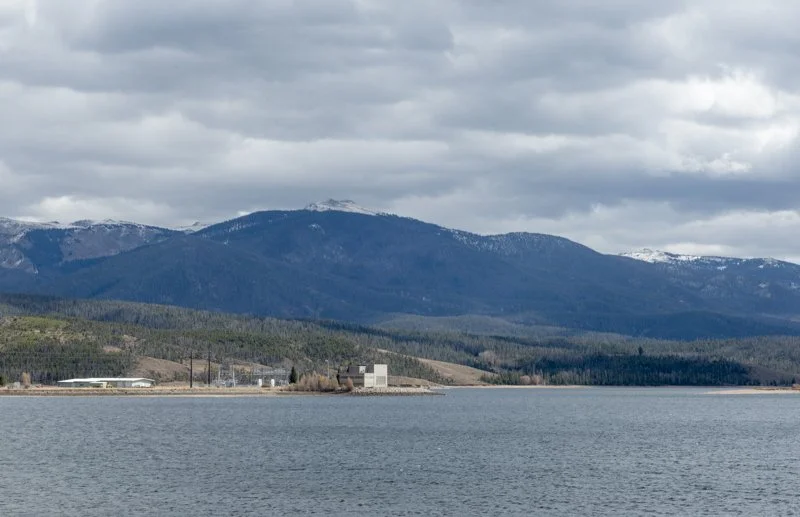
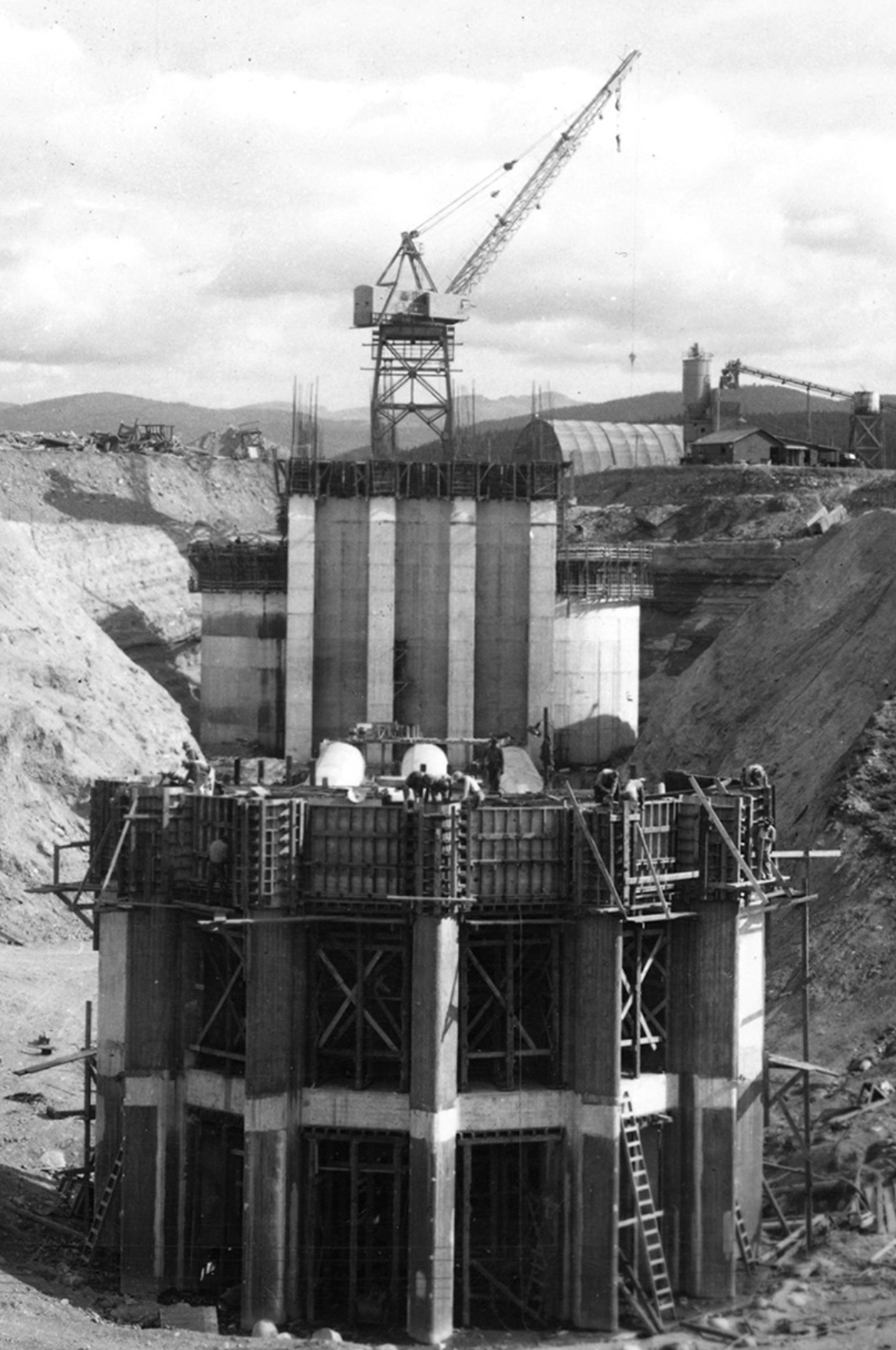
Farr Pump Station Construction, 1948 Courtesy of Northern Water
Crews construct the inlet structure to the Granby Pump Plant, the “heart” of the C-BT system, September 27, 1948 Located on the north shore of Lake Granby, the Farr Pump Plant lifts water from Lake Granby into the Granby Pump Canal where it flows by gravity into Shadow Mountain Reservoir. The lift height at the Farr Pump Plant varies from 92 to 186 vertical feet depending upon the elevation of Lake Granby. Once it has reached the Granby Pump Canal, water flows through a connecting channel to Grand Lake, then into the West Portal of the Adams Tunnel and beneath the Continental Divide on its journey to Northeastern Colorado water users. The Farr Pump Plant was constructed between 1947 and 1951.
“Pump Plants.” Northern Water. Accessed June 16, 2022. https:// www.northernwater.org/what-we-do/deliver-water/pump-plants.
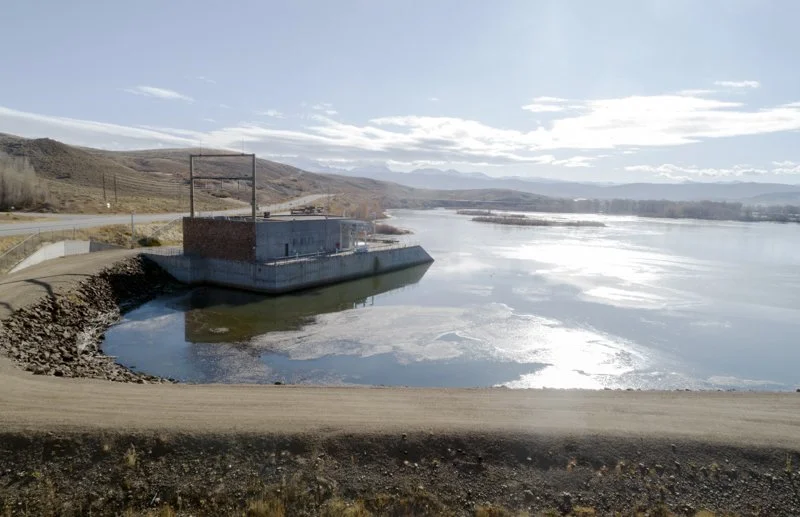
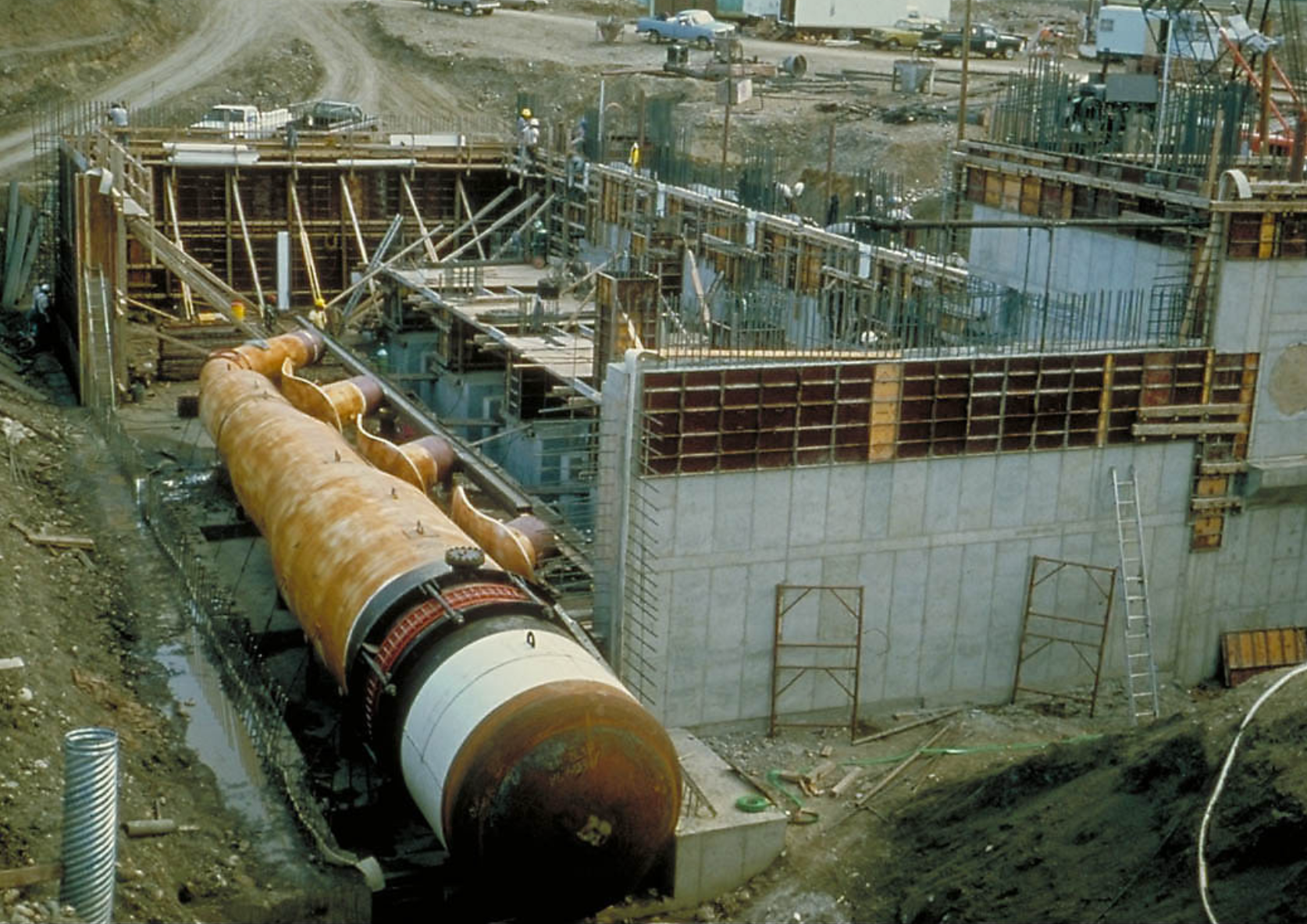
Windy Gap Pump Plant Construction, 1981-1985
Courtesy of Northern Water
In 1967, Greeley and five other Front Range cities formed a mutually beneficial alliance to acquire additional water. Known as the Windy Gap Project, the transbasin diversion project from the Colorado River would use the Colorado-Big Thompson infrastructure to deliver West Slope junior water rights to the Front Range. In 1985, the project came online.
Gregory J. Hobbs, Jr. and Michael Welsh, Confluence: The Story of Greeley Water (City of Greeley, 2020), 205.
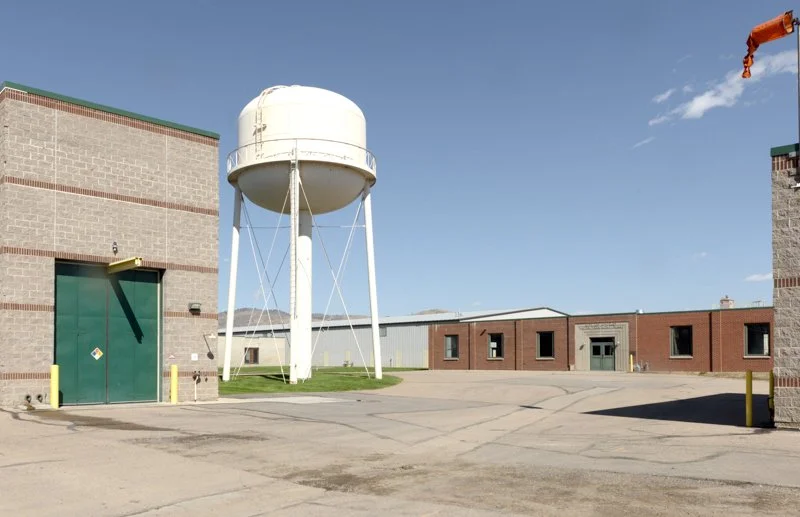
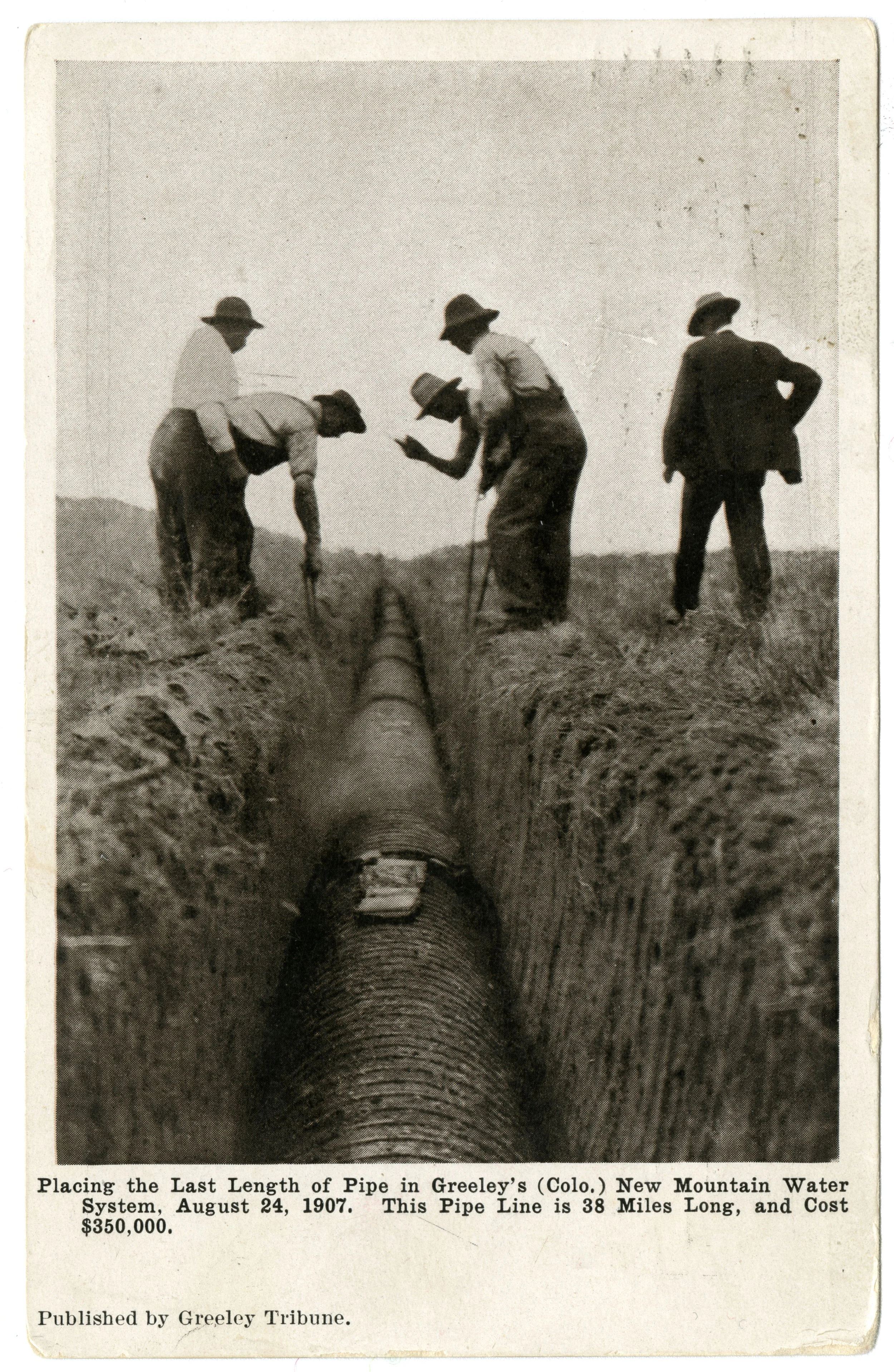
Laying pipe for Greeley’s Mountain Water System, 1907
City of Greeley Museums, Permanent Collection, 1994.43.0096
On August 24, 1907, workers installed the last length of wooden stave pipe to complete the 38-mile pipeline from Bellvue Water Treatment Plant to Greeley. The new mountain water system cost $350,000 ($9.5 million in 2020 dollars) and provided residents with high quality potable water, storied in City Reservoir No. 1 at 23rd Avenue and Reservoir Road.
Gregory J. Hobbs, Jr. and Michael Welsh, Confluence: The Story of Greeley Water (City of Greeley, 2020), 82.